

How to Return Musical Instruments Safely
Last Updated: October 26, 2026
Quick Summary
To return musical instruments safely, start with a sturdy new box at least 5 cm larger than the instrument on all sides, wrap it in at least two layers of 12 mm bubble wrap with tissue paper underneath, add 5 cm cushioning layers on top and bottom, fill all gaps to prevent movement, and seal everything with reinforced packing tape.
- Use a new shipping box rated for at least 5 cm larger than the instrument on all sides
- Wrap instruments in at least two layers of 12 mm bubble wrap after protecting the finish with tissue paper
- Add 5 cm cushioning layers of foam or bubble wrap on both the bottom and top of the box
- Fill all gaps with foam peanuts or packing paper to prevent any movement during transit
- Seal all seams with reinforced packing tape and label the box as FRAGILE with THIS SIDE UP
Table of Contents
- Why Safe Returns Matter for Musical Instruments
- How to Pack a Musical Instrument for Shipping
- Instrument Return Checklist Before Shipping
- Musical Instrument Shipping Insurance Options
- Returning a Rental Instrument Correctly
- Common Mistakes That Damage Instruments in Transit
- Starting Your Instrument Return With RedOne Music Canada
- Frequently Asked Questions
Why Safe Returns Matter for Musical Instruments
Learning how to return musical instruments safely matters because instruments are delicate, expensive, and irreplaceable in their condition. A guitar that arrives cracked, a keyboard with damaged keys, or a drum kit with dented shells loses value instantly. The difference between a safe return and a damaged one often comes down to how you pack it.
Poor packing, inadequate cushioning, and loose internal components can contribute to damage. When you return an instrument, careful packing can help protect it during transit.
Think of packing as a way to help protect your instrument during transit.
How to Pack a Musical Instrument for Shipping
To return musical instruments safely, start with the right materials and a clear packing process. You need cushioning, a sturdy box, and enough space inside to prevent movement. Most damage happens because items shift during transit. Securing the instrument is only the final stage of the process, as checking return policies beforehand ensures that you are fully prepared for the logistics of a successful exchange.
Essential Packing Materials
Start with these supplies before you pack anything:
- Bubble wrap (at least 12 mm thick)
- Foam sheets or foam corners
- Packing paper or kraft paper
- Sturdy cardboard box (at least 5 cm larger than the instrument on all sides)
- Packing tape (reinforced, not standard)
- Tissue paper for delicate surfaces
- Pipe insulation foam for extra protection on fragile areas
The box matters as much as what goes inside. Use a new box rated for shipping, not a box that's been used before. Used boxes lose structural integrity. If you don't have a proper shipping box, ask if the JBL EON ONE Transporter Bag or similar protective case is available for your instrument type.
Step-by-Step Packing Process
Step 1: Prepare the Instrument
Remove all detachable parts. Strings on guitars should be loosened slightly to reduce tension. Close all doors, lids, and compartments. Wrap the instrument in tissue paper first to protect the finish from direct contact with bubble wrap.
Step 2: Create a Cushioning Layer
Place 5 cm of foam or bubble wrap on the bottom of the box. This absorbs impact from drops. Don't skip this step, even if the box seems sturdy.
Step 3: Wrap the Instrument
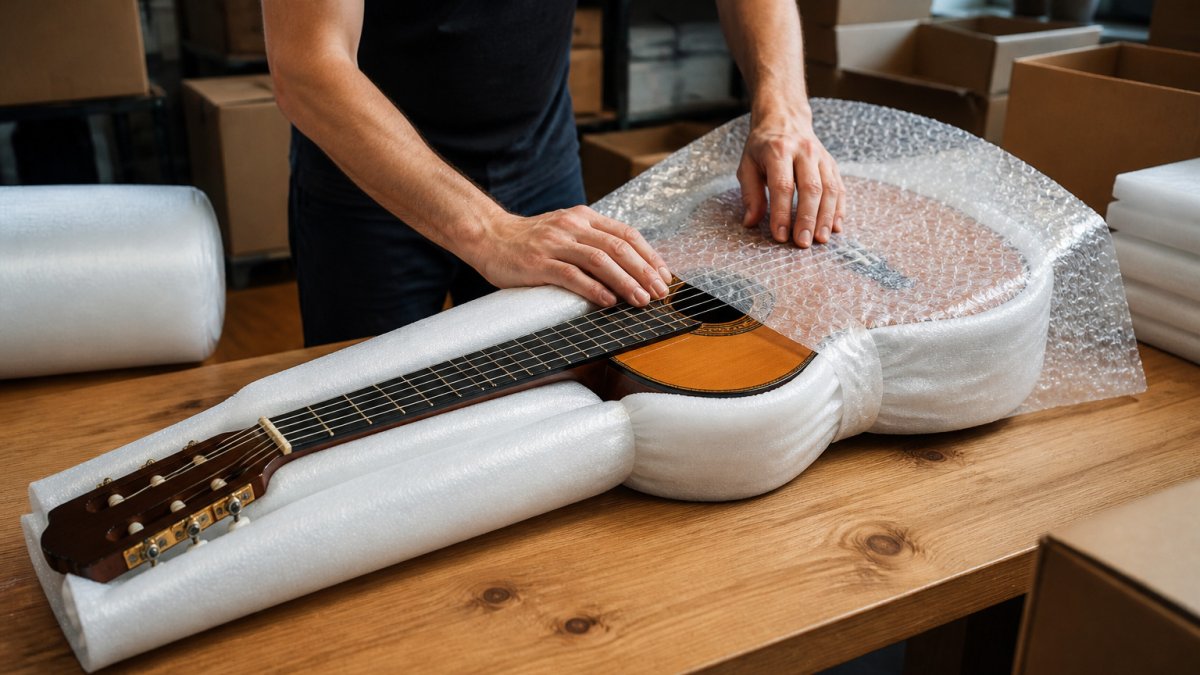
Wrap the instrument in at least two layers of bubble wrap. Use at least 12 mm bubble wrap. Secure the wrap with tape, but don't tape directly to the instrument's finish. Wrap the tape around the bubble wrap only.
Step 4: Add Side Protection
Place foam sheets or pipe insulation around the wrapped instrument. Focus on corners and edges. These areas take the most impact during handling.
Step 5: Fill Empty Space
Fill any gaps with crumpled packing paper or foam peanuts. Movement inside the box causes damage. Every gap should be filled. Shake the box gently. If anything moves, add more cushioning.
Step 6: Create a Top Cushioning Layer
Add another 5 cm of foam or bubble wrap on top. This protects against impacts from above.
Step 7: Seal and Label
Use reinforced packing tape on all seams. Tape the box closed on all sides, including the bottom. Label it clearly as "FRAGILE" and "THIS SIDE UP" if applicable. Include your contact information and the recipient's address.
Add to Cart →
Instrument Return Checklist Before Shipping
Before you hand the box to the carrier, verify these points:
- Box is new or in excellent condition
- Instrument has been loosened (strings, tension devices)
- Tissue paper protects the instrument's finish
- At least two layers of bubble wrap surround the instrument
- Foam sheets protect corners and edges
- No gaps remain inside the box
- Cushioning layers exist on top and bottom
- Box is sealed with reinforced tape on all seams
- Box is labeled "FRAGILE" and "THIS SIDE UP"
- Return label is clear and complete
- You have proof of shipment and tracking number
- Documentation of the instrument's condition is saved
Take a photo of the packed box before shipping. If damage occurs, you'll have a record of how you packed it.
Musical Instrument Shipping Insurance Options
When you return a musical instrument, check the carrier's coverage terms to understand what protection is available.
Keep receipts, photos, and condition reports. These documents prove the instrument's value if you file a claim.
Returning a Rental Instrument Correctly
Keep your rental agreement handy during the return process. It outlines what constitutes damage and what's covered.
Common Mistakes That Damage Instruments in Transit
Most damage happens because of predictable mistakes. Knowing these helps you avoid them.
Using a box that's too small forces you to pack tightly. Tight packing reduces cushioning effectiveness. The instrument can't absorb impact properly.
Wrapping directly in bubble wrap without tissue paper allows the plastic to stick to finishes, especially in cold weather. This damages paint and varnish.
Skipping the bottom cushioning layer means the box's cardboard absorbs the first impact. A single drop can crack the bottom and damage what's inside.
Filling gaps with newspaper instead of foam peanuts or packing paper provides almost no protection. Newspaper compresses easily and offers minimal shock absorption.
Taping bubble wrap directly to the instrument can tear finishes when removed. Always tape around the wrap, not to the instrument.
Packing multiple instruments together in one box is risky. They shift and hit each other during transit. Pack each instrument in its own box.
Ignoring weight limits on the box causes structural failure. A box rated for 10 kg can collapse if it weighs 15 kg inside. Check the box's weight rating.
Not securing the return label means the package gets lost or sent to the wrong address. Use a clear plastic sleeve for the label.
Watch out: if the box arrives damaged before you even pack it, don't use it. A compromised box won't protect your instrument. Start with a new one.
These common packing mistakes cause most instrument damage during return shipping.
| Mistake | Cause of Damage | Prevention |
|---|---|---|
| Box too small | Tight packing reduces cushioning effectiveness | Use box at least 5 cm larger than instrument |
| Wrapping directly in bubble wrap | Plastic sticks to finishes in cold weather | Use tissue paper as first layer |
| Skipping bottom cushioning | Cardboard absorbs first impact from drops | Add 5 cm foam or bubble wrap on bottom |
| Filling gaps with newspaper | Newspaper compresses and offers no protection | Use foam peanuts or packing paper |
| Taping bubble wrap to instrument | Tape tears finishes when removed | Tape around wrap only, not to instrument |
| Packing multiple instruments together | Instruments shift and hit each other | Pack each instrument in its own box |
| Ignoring box weight limits | Box collapses under excess weight | Check box rating and stay within limits |
| Unsecured return label | Package gets lost or sent wrong address | Use clear plastic sleeve for label |
Starting Your Instrument Return With RedOne Music Canada
Keep your tracking number and proof of shipment until the return is complete.
Returning a musical instrument safely requires planning, the right materials, and attention to detail. Most damage is preventable with proper packing. Take the time to do it right, and your instrument will arrive in the condition it left. RedOne Music Canada makes returns straightforward with clear instructions and responsive support. Get started with Canada Post shipping guidelines for fragile items to understand carrier requirements in your area, then FedEx's instrument shipping best practices for additional protection options, and review UPS guidance on packing valuable items before you ship your return.
Frequently Asked Questions
How should I pack a musical instrument for return shipping?
Start by cleaning the instrument and placing it in its original case if available. Wrap the instrument in multiple layers of bubble wrap, securing each layer with tape. Fill empty spaces in the case with foam padding or packing peanuts to prevent movement. Place the packed case inside a sturdy outer box with at least 5 centimetres of cushioning on all sides. Seal all seams with heavy-duty packing tape and label the box as fragile. This layered approach protects against impact and vibration during transit.
Should I get musical instrument shipping insurance when returning an item?
Yes, shipping insurance is highly recommended for valuable instruments. Most carriers offer declared value coverage, but it may not fully cover the instrument's actual worth. Check your return authorization to see if RedOne Music Canada covers shipping damage, then purchase additional insurance if needed. The cost of insurance is typically a small percentage of the item's value and protects you against loss or significant damage during transit.
What should I do if my returned instrument arrives damaged at the warehouse?
Document the damage immediately with photos and contact RedOne Music Canada's customer service with your return authorization number and images. Keep all original packaging and the shipping label. The carrier may require damage claims within a specific timeframe, so report issues promptly. If you purchased shipping insurance, file a claim with the carrier as well. RedOne Music Canada will work with you to resolve the issue, whether through repair or replacement, depending on the damage severity and your original purchase agreement.
Is it better to return an instrument in its original packaging?
Original packaging is ideal because it was designed specifically to protect that instrument during shipping. However, if original packaging isn't available, you can create equally effective protection using quality alternatives: a hard case, multiple layers of bubble wrap, and a sturdy outer box with adequate cushioning. The key is replicating the original design's protection: secure fit inside a case, padding around the case, and a reinforced outer box. Never ship an instrument in soft-sided bags or with minimal padding.

No comments yet
Be the first to share your thoughts on this article.
Leave a comment
Ready to find your sound?
Explore our wide selection of instruments, gear, and accessories. Whether you're a beginner or a pro, we've got what you need.